Prayer beads are a form of beadwork used to count the repetitions of prayers, chants, or mantras by members of various religions such as Christian denominations (such as the Roman Catholic Church, the Lutheran Church, the Anglican Church, the Oriental Orthodox Churches, and the Eastern Orthodox Churches), Hinduism, Jainism, Buddhism, Shinto, Umbanda, Sikhism, the Baháʼí Faith, and Islam. Prayer beads may also be used by some Sephardi or Mizrahi Jews. Common forms of beaded devotion include the mequteria in Oriental Orthodox Christianity, the chotki or komposkini or prayer rope in Eastern Orthodox Christianity, the Wreath of Christ in Lutheran Christianity, the Dominican rosary of the Blessed Virgin Mary in Roman Catholic Christianity, the japamala in Buddhism and Hinduism, the Jaap Sahib in Sikhism and the misbaha in Islam.
In Christianity
- History: The Desert Fathers of the 3rd to 5th centuries used pebbles or knotted ropes to count prayers, typically the Jesus Prayer (“Lord Jesus Christ, Son of God, have mercy on me, a sinner”). The invention is attributed to Saints Anthony the Great or his associate Pachomius the Great in the 4th century. In the Vita of Saint Paul of Thebes (227 AD to 342 AD), written by Saint Jerome (347 AD to 420 AD), it states that Saint Paul of Thebes used pebbles and a knotted cord to count prayers
- Name: Rosary or Prayer Rope
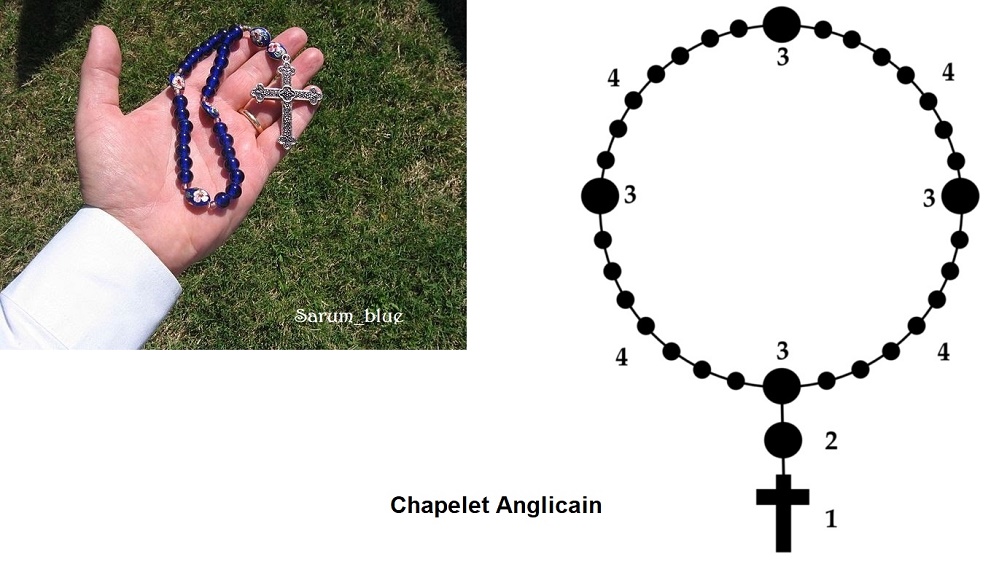
- Bead Count: Roman Catholic rosaries typically use 59 beads; Anglican prayer beads use 33 beads; Eastern Orthodox traditionally use a wool or rope with 33, 50, or 100 knots instead of beads
- Use: Meditating on sacred events in the lives of Jesus and Mary or reciting the Jesus Prayer
Roman Catholicism: Uses the traditional Dominican Rosary (typically 59 beads) and various chaplets to meditate on the mysteries of Jesus and Mary while reciting prayers like the Hail Mary and Our Father.
Eastern Orthodoxy & Oriental Orthodoxy: Primarily use a knotted wool or wooden rope called a komboskini or chotki (usually with 33, 50, or 100 knots) to track the Jesus Prayer. Some traditions like the Ethiopian Orthodox Tewahedo Church use a bead string called a Mekuteria (often 41 or 64 beads). Russian Old Believers traditionally use a leather ladder-like rope called a lestovka
Anglicanism / Episcopalianism: Use Anglican prayer beads (the “Anglican Rosary”), a 33-bead circular loop developed in the 1980s that is structured around the weeks of the year and the life of Christ rather than Marian devotions
Lutheranism, Methodism, and Reformed Churches: While historically non-liturgical or opposed to bead use, many modern members, and sometimes official groups, use adaptations like the Lutheran Wreath of Christ or Anglican-style prayer beads for personal meditation
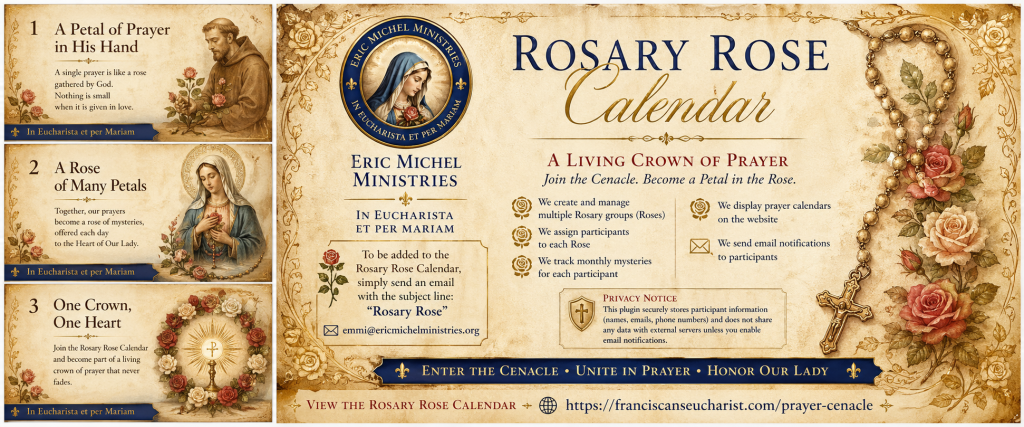
🌹 A Franciscan Poetic Post
🌿 A Crown of Prayer, Petal by Petal
Have you forgotten which mysteries your lips were meant to carry today?
Do not worry… the prayer remembers you.
Like the little poor man, Francis of Assisi gathering flowers in the fields of the Lord,
we too gather prayers — simple, humble, hidden —
and offer them as a living rose to Heaven.
🌹 The Rosary Rose Calendar is not a system alone…
it is a garden.
Each soul, a petal.
Each mystery, a fragrance.
Each day, a quiet offering rising through the hands of Our Lady.
You are gently placed within a “rose” of prayer,
where mysteries unfold like dawn and dusk,
and your voice becomes part of a greater harmony —
a cenacle of hearts beating in rhythm with grace.
📩 To enter this garden, simply write:
“Rosary Rose” to african.harvestime@gmail.com
🔒 What is entrusted is kept in peace.
Your name rests like a seed in good soil,
never scattered, never sold —
only nourished for prayer
✨ Come…
Take your place in the circle of devotion.
Let your prayer become a petal
in a crown that never fades
🌐 Enter the Cenacle
Footer line:
“Join the Cenacle — Become a Petal in the Rose”