Home of Eric Michel Ministries International
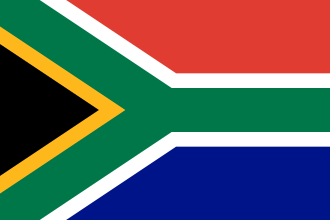
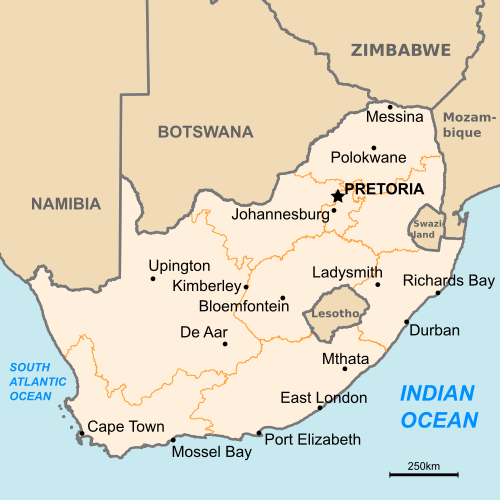
South Africa, officially the Republic of South Africa (RSA), is the southernmost country in Africa. The country consists of nine provinces, and is bounded to the south by 2,798 kilometres (1,739 miles) of coastline that stretches along the South Atlantic and Indian Ocean; to the north by the neighbouring countries of Namibia, Botswana, and Zimbabwe; and to the east and northeast by Mozambique and Eswatini. South Africa also encloses Lesotho. Covering an area of 1,221,037 square kilometres (471,445 square miles), the country has a population of over 63 million people, making it the sixth-most populated country in Africa, and 24th-most in the world.
The Republic of South Africa was established on May 31, 1961 by the Crown of the United Kingdom of Great Britain, the senate and house of assembly of the Union of South Africa through the Republic of South Africa Act. It construed the powers of the Crown and monarch of South Africa to the office of State President.
Pretoria is the administrative capital, while Cape Town, as the seat of Parliament, is the legislative capital, and Bloemfontein is regarded as the judicial capital. The largest and most populous city is Johannesburg, followed by Cape Town and Durban.
South Africa encompasses a variety of cultures, languages, and religions, and has been called the “rainbow nation”, especially in the wake of apartheid, to describe its diversity.
Religion
85.3% Christianity
7.8% Traditional faiths
3.1% No religion
1.6% Islam
1.1% Hinduism
1.1% other
Cameroon Metropolitan See
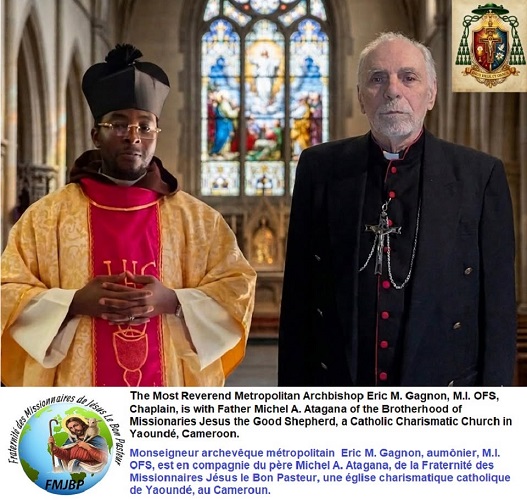
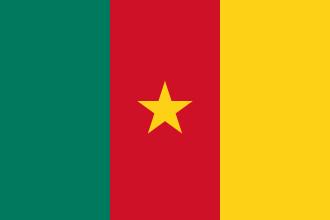
Cameroon, officially the Republic of Cameroon, is a country in Central Africa. It shares boundaries with Nigeria to the west and north, Chad to the northeast, the Central African Republic to the east, and Equatorial Guinea, Gabon, and the Republic of the Congo to the south. Its coastline lies on the Bight of Biafra, part of the Gulf of Guinea, and the Atlantic Ocean. Due to its strategic position at the crossroads between West Africa and Central Africa, it has been categorized as being in both geostrategic locations. Cameroon’s population of nearly 31 million people speak 250 native languages, in addition to the national tongues of English and French. The capital city of the country is Yaoundé.
Structure and Role
Ecclesiastical Province: A group of nearby dioceses (called suffragan dioceses) managed together.The See: The specific city and seat of the church where the cathedral is located.
Responsibilities: Presiding over provincial synods, checking local suffragan bishops, and handling appeals.
Key Differences
Metropolitan vs. Standard Archbishop: Not all archbishops lead a metropolitan see or have subordinate dioceses.
Meaning of “Metropolitan”: It refers to the historical “mother city” (metropolis) of a Roman or church province, rather than a modern municipal city zone.
Religion
The official languages of Cameroon are French and English. Christianity is the majority religion in Cameroon, with significant minorities practising Islam and traditional faiths.
66.3% Christianity: 33.1% Catholic, 27.1% Protestant, 6.1% other Christian
30.6% Islam
1.3% traditional faiths
1.1% no religion
0.7% other religions
Superintendency
- A superintendency is the job, office, or control of a superintendent. It also means the district or area that a superintendent manages.
- A superintendent is a person who is in charge of an Ecclesiastic District.
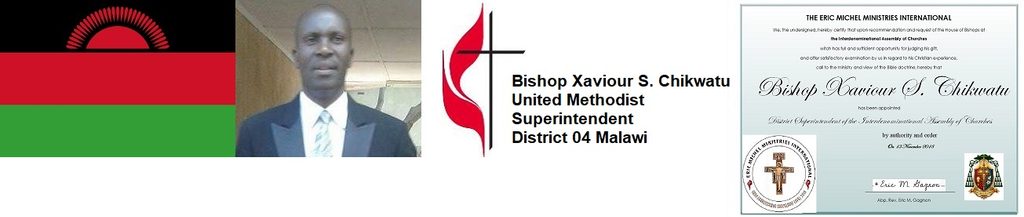
Malawi, officially the Republic of Malawi, is a landlocked country in Southeast Africa. It is bordered by Zambia to the west, Tanzania to the north and northeast, and Mozambique to the east, south, and southwest. Malawi spans over 118,484 km2 (45,747 sq mi) and has a population of 22,224,282 (as of July 2025). Lilongwe is its capital and largest city
Religion (2018 census)
82.3% Christianity
58.5% Protestantism
17.2% Catholicism
6.6% other Christian
13.8% Islam
2.1% none
1.2% traditional faiths
0.6% other.

Kenya, officially the Republic of Kenya, is a country located in East Africa. With an estimated population of more than 54.2 million as of mid-2026, it is the 27th-most populous country in the world and the seventh-most populous in Africa. Kenya’s capital and largest city is Nairobi. The second-largest and oldest city is Mombasa, a port city located on Mombasa Island. Other major cities within the country include Kisumu, Nakuru and Eldoret. Going clockwise, Kenya is bordered by South Sudan to the northwest, Ethiopia to the north, Somalia to the east, the Indian Ocean to the southeast, Tanzania to the southwest, and Lake Victoria and Uganda to the west. Its geography, climate and population vary. In western Rift Valley counties, the landscape includes cold, snow-capped mountaintops (such as Batian, Nelion, and Point Lenana on Mount Kenya) with surrounding forests, wildlife, and fertile agricultural regions in temperate climates. In other areas there are dry, arid, and semi-arid climates, as well as absolute deserts (such as the Chalbi Desert and Nyiri Desert).
Religion (2019 census)
85.5% Christianity
10.9% Islam
1.6% no religion
0.7% traditional faiths
1.3% other religions
Sources: